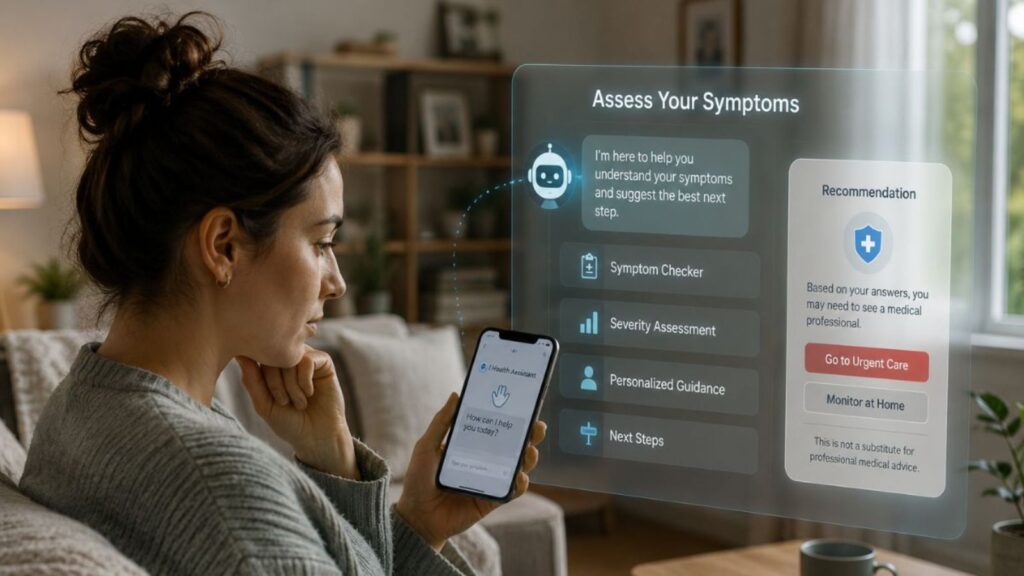
Sudden symptoms or minor injuries can leave people unsure about what to do next. Many people are unsure whether they should stay home, schedule a doctor’s appointment, or visit urgent care, especially when symptoms appear unexpectedly or worsen after normal office hours.
AI-powered symptom checkers and online health tools have become more common in recent years. Many people now use AI for urgent care guidance to better understand possible causes of illness and decide whether same-day care may be needed.
While AI cannot replace a medical professional, it may help people decide when urgent care may be appropriate.
How AI Symptom Checkers Work
Many digital symptom tools ask questions about:
- Fever
- Pain levels
- Duration of illness
- Breathing issues
- Recent illnesses
- Age and medical history
Based on the answers provided, the system compares health concerns with common medical conditions and offers general care suggestions.
Some tools may recommend:
- Monitoring symptoms at home
- Scheduling a primary care appointment
- Visiting urgent care
- Seeking emergency medical attention
- These platforms are designed to provide guidance, not a diagnosis.
Situations Where AI May Suggest Urgent Care
AI tools often recommend same-day care when symptoms appear persistent, uncomfortable, or difficult to evaluate without an in-person exam.
Fever That Does Not Improve
Fever can develop from viral infections, flu, or other illnesses.
A symptom checker may recommend urgent care when:
- Fever lasts several days
- Temperature continues rising
- Fatigue becomes severe
- Dehydration signs appear
Persistent fever may point to an infection that requires treatment.
Sore Throat With Additional Symptoms
A mild sore throat may improve on its own, but some warning signs can indicate a more serious condition.
A same-day visit may help when a sore throat occurs alongside:
- Fever
- Swollen glands
- Difficulty swallowing
- White patches in the throat
Testing can help determine whether the illness is viral or bacterial.
Coughing or Breathing Problems
AI systems often identify breathing concerns as problems that need prompt attention. Many people rely on AI for urgent care decisions when they are unsure whether breathing problems require medical care.
An in-person exam may help when someone experiences:
- Wheezing
- Chest tightness
- Shortness of breath
- Lingering cough
Breathing problems can worsen quickly without treatment.
Vomiting or Diarrhea
Digestive illnesses are common, but prolonged stomach issues may increase the risk of dehydration.
AI guidance may suggest urgent care for:
- Repeated vomiting
- Trouble keeping fluids down
- Ongoing diarrhea
- Dizziness
- Severe stomach pain
Young children and older adults may become dehydrated more easily.
Minor Injuries
AI tools may also guide people who are unsure whether an injury requires professional care.
Same-day treatment is often appropriate for:
- Sprains
- Mild burns
- Cuts needing evaluation
- Swelling after falls
- Sports injuries
Increasing pain or swelling should not be ignored.
What AI Cannot Do
Although symptom checkers can be useful, they still have limitations.
AI cannot:
- Perform physical examinations
- Check oxygen levels
- Listen to breathing
- Evaluate injuries directly
- Replace medical judgment
- Confirm a diagnosis
People with similar symptoms may still have different medical conditions, so online tools should only be used for general guidance.
Why People Use AI Before Visiting Urgent Care
Many people use symptom tools to get a clearer idea of how serious a condition may be.
These tools may reassure people when symptoms seem mild or encourage faster care when warning signs appear.
People commonly use AI for urgent care guidance when:
- Symptoms begin late at night
- A primary care office is unavailable
- They are unsure where to seek treatment
- Health concerns suddenly worsen
- They want help deciding between urgent care and the emergency room
This guidance can help reduce uncertainty before seeking care.
Signs That Usually Require Emergency Care
AI tools often direct users to emergency care when warning signs could indicate a serious condition.
Emergency treatment may be necessary for:
- Severe difficulty breathing
- Chest pain
- Sudden confusion
- Loss of consciousness
- Severe allergic reactions
- Serious head injuries
- Uncontrolled bleeding
Conditions involving these warning signs should not rely on online guidance alone.
When Urgent Care May Be the Right Choice
Urgent care is commonly used for conditions that need prompt attention but are not life-threatening.
Same-day visits may help with:
- Flu symptoms
- Ear infections
- Mild asthma flare-ups
- Fever
- Sore throat
- Rashes
- Minor injuries
- Pink eye
Many visits focus on examinations, testing, symptom relief, and treatment recommendations. In many situations, AI for urgent care can help people decide when to seek care before symptoms get worse.
What Happens During an Urgent Care Visit
Most appointments begin with a review of symptoms and medical history.
Depending on the condition, care may include:
- Physical examination
- Rapid testing
- X-rays for injuries
- Prescription treatment
- Home care instructions
If a condition requires a higher level of treatment, patients receive guidance on the appropriate next steps.
Can AI Replace Medical Providers?
AI continues to improve, but healthcare providers still play the central role in diagnosis and treatment.
Medical decisions often depend on factors that technology cannot fully measure, including:
- Physical examination findings
- Medical history details
- Provider experience
- Changes in condition over time
Frequently Asked Questions
Can AI tell me when to go to urgent care?
AI symptom tools may provide guidance based on the information entered, but they cannot diagnose conditions or replace professional care.
When should I go to the emergency room instead?
Emergency care is important for severe breathing problems, chest pain, loss of consciousness, major injuries, or other serious warning signs.
Are symptom checkers accurate?
Symptom checkers may provide useful general guidance, but results are not always accurate because many illnesses share similar signs.
Can urgent care treat common illnesses and injuries?
Urgent care providers commonly evaluate conditions like fever, sore throat, flu symptoms, cough, minor injuries, rashes, and stomach illnesses.
Should I still see a provider if symptoms seem mild?
If symptoms worsen or continue longer than expected, medical care is still recommended. Care should also be considered when symptoms feel concerning, even if an online tool suggests home care.
Our Urgent Care Walk-In Clinics in Omaha, Bennington, West Omaha, Rockbrook, Crossroads & Bellevue, NE
Our staff works to provide prompt, personal, and professional care for all of our patients. We strive to provide the attention patients need in as quick a time as possible. Urgent Care Clinics in Omaha & Bellevue, Nebraska, has three locations in the Omaha metropolitan area. Our three walk-in clinics are:
- Rockbrook Urgent Care
- Crossroads Urgent Care
- Bellevue Urgent Care
- West Omaha Urgent Care
- Bennington Urgent Care
Disclaimer
The information contained on this webpage is for educational purposes as well as to provide general information and a general understanding of the pertinent medical issue, only, not to provide a specific diagnosis. This information is not intended to be a substitute for professional medical advice. By using this blog/website, you understand there is no doctor-patient relationship between you and the blog/website publisher. The information included on this site should not be used as a substitute for medical advice from a licensed medical professional in your state. Neither Urgent Care Network, its subsidiaries, affiliates, assignees, or successors in interest, nor any other party assumes liability for loss or damage due to reliance on the content of this blog/website. If you are experiencing a severe medical issue, you should seek emergency assistance immediately.